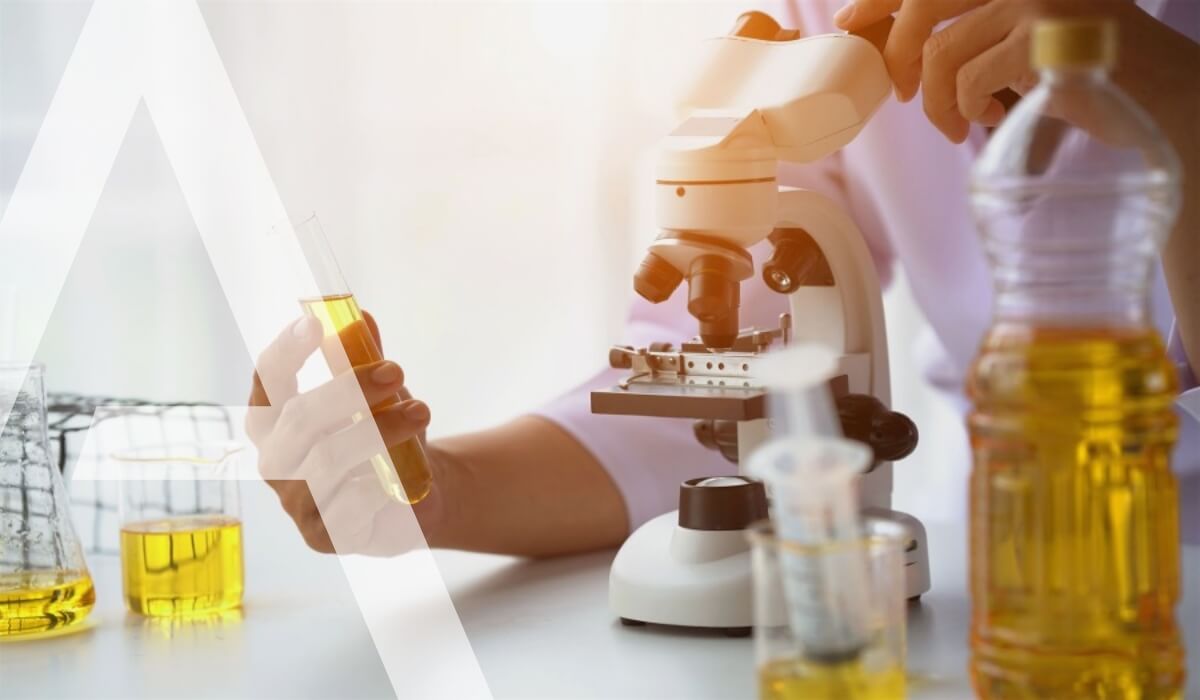

Widely used in our laboratory analyses, carbon-14 (or radiocarbon) dating is also employed in research and analysis of bio-based products.
What is ASTM D6866?
ASTM D6866 is a test method developed by ASTM International. This protocol provides detailed instructions on how to experimentally measure the bio-based carbon content of solid, liquid, or gaseous samples in accordance with current regulations using radiocarbon analysis (also known as Carbon-14 analysis).
Radiocarbon analysis for manufacturers
Whether for raw materials or products from your suppliers, radiocarbon dating is primarily used by manufacturers.
CIRAM laboratories analyze the bio-based content of materials at each stage; we evaluate products in R&D, in development, and finished products ready for commercialization. Measuring the carbon 14 in your products allows us to define the quantity and proportion of bio-based materials and from petroleum-based materials.
Radiocarbon analysis to measure the content of biobased products
It is important to differentiate between two types of carbon:
- Modern carbon: the current biomass (cereals, oils, algae, organic waste) used to manufacture biosourced molecules contains exclusively "modern" carbon;
- Old" carbon: the petroleum used to manufacture synthetic products contains only "old" carbon.
By measuring the ratio of 14C, 13C and 12C isotopes, radiocarbon analysis can quantify the proportion of modern (i.e. bio-based) and old (i.e. petro-based) carbon present in a product.
Note that to comply with ASTM D6866, the sample must first be transformed into pure carbon (graphite), as it is this graphite target that will be analyzed in the laboratory by a particle gas pedal coupled to a mass spectrometer (AMS).
According to the international standard ASTM 6866, carbon 14 can be measured by three different methods, but here we will only deal with the particle gas pedal mass spectrometry (AMS) technique.
Measures to comply with ASTM D6866
To comply with current regulations and(ASTM D6866, the biogenic carbon content must be expressed as a percentage of modern carbon relative to total carbon, resulting in a value expressed as pMC (Percentage of Modern Carbon).
The reference value, called REF, corresponds to 100% biobased carbon at a given date.
Note that in 2022, still according to ASTM D6866, the REF was 100 pMC for a 100% biobased carbon content, whereas the value was 102pMC in 2015 and 200 in 1962. In order to harmonize the results and keep the same reference values, we consider that over the last four years, 100 pMC represents 100% biobased carbon content in relation to total carbon.
ASTM D6866 also allows for a ±3% variation in biobased carbon content using the radiocarbon technique. This margin of error considers, for example, a measurement at 97 pMC as corresponding to 100% biobased carbon in relation to total carbon.
Measuring materials containing inorganic carbonates
With regard to materials containing inorganic carbonates, ASTM D6866 states that chemical leaching may be performed to remove the carbonates. Since carbonates contain carbon derived from geological materials, there is a risk that the pMC value will be artificially reduced, thereby skewing the results. In fact, the radiocarbon method treats carbon from geological carbonates and carbon from petroleum in the same way. This distinction is important because, unlike the NF EN 16640 standard , which considers the percentage of bio-based carbon relative to total carbon, the international ASTM D6866 standard determines the bio-based carbon content relative to total organic carbon.
CIRAM, specialist in radiocarbon analysis
As specialists in radiocarbon analysis, our scientists carry out all tests in the laboratory. We comply with current international standards to deliver accurate results thanks to innovative solutions and meticulous support.