How to recognize bronze and differentiate it from brass?
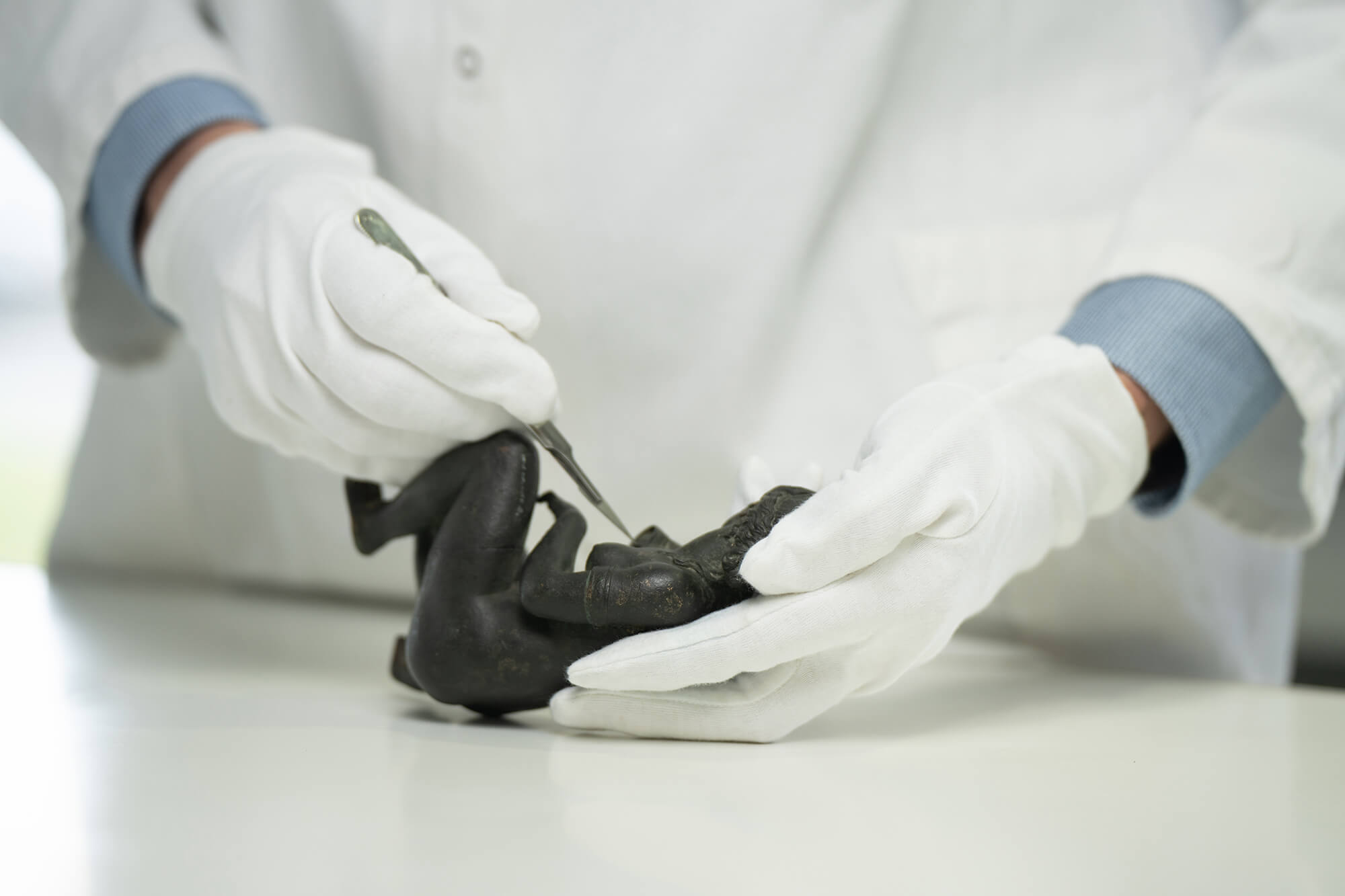
Distinguishing a work of art in bronze from one in brass is not possible at a glance, however expert. Deceptive patinas, invisible restorations, sophisticated forgeries...

The analysis of metals by CIRAM authenticates and dates the art objects thanks to complementary methods, particularly on the bronze, gold, silver, iron, and brass.
Contact our teams
The metallography is a structural analysis method for observing the internal organization of metals and alloys. It does not provide absolute dating, but it does provide key clues as to age and manufacturing processes.
By studying microstructures (dendrites, inclusions, metal grains...), it is possible to determine whether an object has been melted, forged or hammered, and whether these techniques are consistent with a given period. Coupled with chemical analysis and the study of patina, metallography offers a complete vision of the history of a metal object.
At CIRAM supports, it's part of a rigorous scientific approach to authenticating metal objects.
Request a quote
The date metals , but CIRAM supports offers authentication using reliable age tests. For bronze, silver or brass, we identify the chemical composition of the alloy and detect modernity markers, such as the presence of aluminum, phosphorus or chromium in bronze, or manganese in iron.
The analysis is completed by a study of patina (corrosion) and internal structure.
Gold and iron require a specific methodology, but thanks to our researchers and state-of-the-art techniques, we can authenticate and estimate the age of all metal objects, whatever the nature of the metal.
Contact our teams
CIRAM supports uses advanced methods to authenticate and date metal objects :
Our engineers interpret these data to distinguish natural patina and artificial corrosion, determine the age of objects and provide a reliable authenticity test, particularly for bronze objects.
Request a studyThe chemical analysis of alloys allows identifying major and minor elements (copper, tin, zinc, lead...) in order to determine the nature and techniques of fabrication of a metal object.
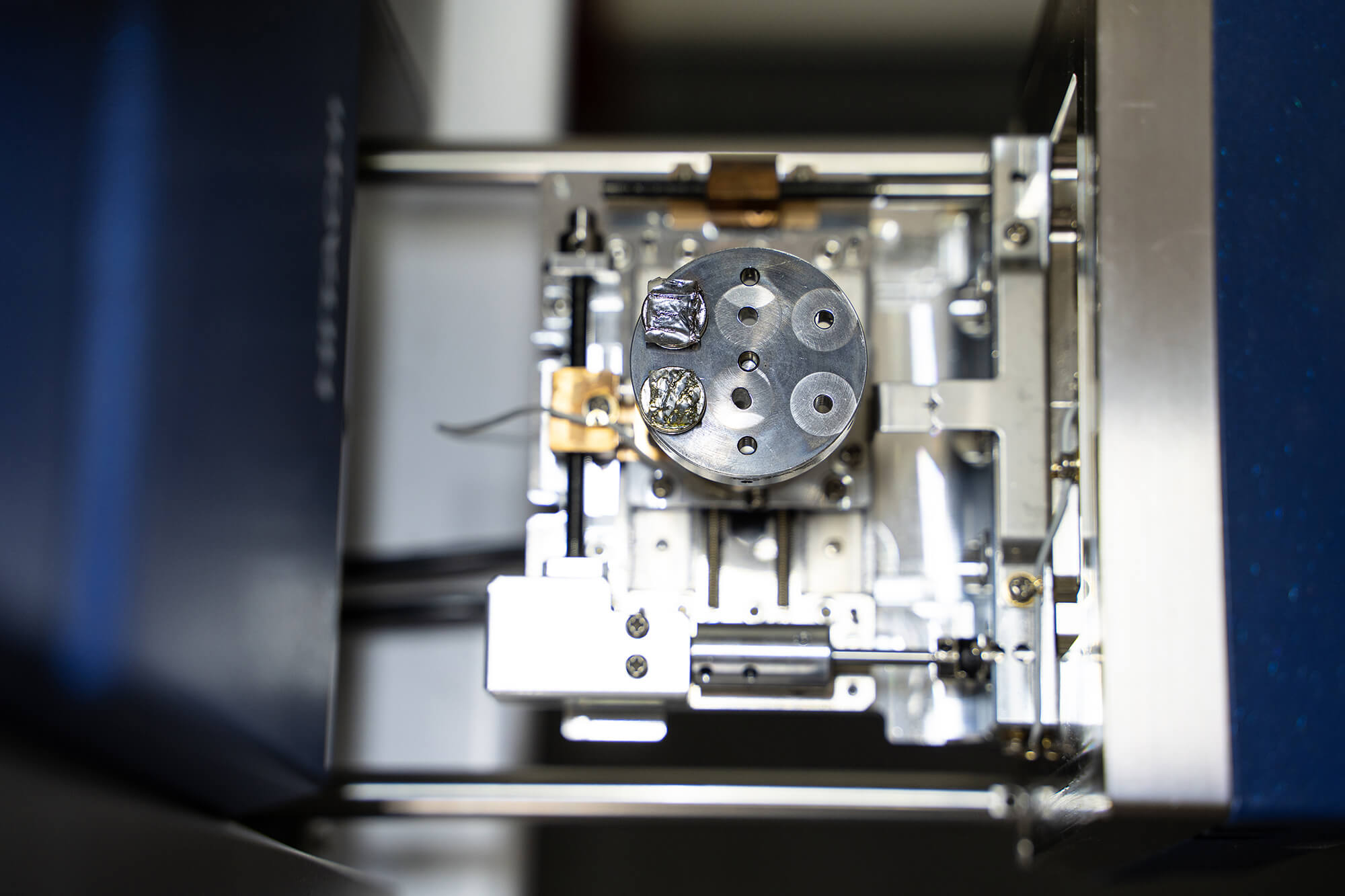
CIRAM supports uses scanning electron microscopy (SEM-EDX) to determine this composition and examine the metal's internal structure. The presence of details such as dendrites or flattened, aligned inclusions reveal the manufacturing techniques used (casting, hammering).
If this study is not always enough to prove antiquity, the presence of elements such as aluminum, chromium, phosphorus, or manganese is a formal indicator of modernity, as these components were only intentionally used in alloys from the end of the 19th century.e century.
The corrosion, or skates, reflects the interactions between an object and its environment over time. A alloy of copper or silver several hundred years old will have undergone numerous attacks from the environment (humidity, temperature variations, micro-organisms, etc.).
In old bronze, the formation of corrosion products such as cuprite, malachite or azurite is typical. The study aims to analyze the degree of corrosion (deep or superficial).
These elements will lead to metal degradation, the analysis of which can provide clues as to the age or modernity of the object. Using electron microscopy, we analyze the depth and composition of corrosion. An object with a patina of homogeneous, superficial weathering may indicate modern manufacture with an artificial patina.
This stage differentiates between natural corrosion and artificial treatment. Preferential degradation of copper-rich zones, the presence of multiple corrosion products (cuprite, malachite, atacamite, etc.), the absence of recurring chlorine or sulfur, or the association of sediments are signs of authenticity.
For example, an authentic bronze will show complex deposits associated with natural sediments, while an artificial patina will generally include traces of chlorine or sulfur in high proportions.
One surface corrosion, homogeneous and rich in chlorine indicates artificial alteration, typical of a copy. Even after intense cleaning, scanning electron microscopy analysis remains effective: the corrosion process infiltrate deeply and leave detectable traces despite abrasion.
For over 20 years, CIRAM supports has been a leader in scientific analysis of art objects. We offer unique expertise, based on state-of-the-art tools, to meet the needs of the art markets and archaeology. Our analyses enable :
The authentication and dating of metals, particularly bronze, requires advanced scientific skills and cutting-edge technology. By choosing to entrust your works of art to the CIRAM laboratory, you benefit from recognized expertise to guarantee accurate and reliable results.
Trust our experts to support you in your analysis projects.
Contact our teamsMetallography allows us to observe the internal structure of a metal to identify manufacturing processes (melting, hammering...) and detect signs of age.
We analyze bronze, gold, silver, brass, copper, iron and other metal alloys used in the manufacture of objets d'art.
We use SEM-EDX, ICP-MS, ICP-AES and thermoluminescence tests to analyze compositions, structures and alterations.
Bronze is an alloy of copper and tin, while brass is an alloy of copper and zinc. We distinguish them by chemical analysis.
Yes, it can also be used to date archaeological artefacts and quantify the biomass content of industrial materials.
Distinguishing a work of art in bronze from one in brass is not possible at a glance, however expert. Deceptive patinas, invisible restorations, sophisticated forgeries...
A simple signature can make the difference between an anonymous work and a masterpiece valued in the millions on the art market. But what happens when that signature is...
Knowing how to recognize an authentic antique bronze is a strategic issue for art professionals, to guard against fakes. Patina, composition, corrosion: every clue can help you...
How to analyze a work of art without damaging it? Thanks to non-destructive analysis techniques, it is now possible to access valuable information about pigments, re...
Should optical imaging or radiography be used to analyze a work of art, an archaeological object or an industrial material? Behind this question lie the crucial issues of...
X-ray analysis of paintings allows us to examine a work’s internal structure without damaging it. Using X-rays, this technique reveals past restorations, retouching, cracks, and…