Fossilized wood samples dated by CIRAM lab
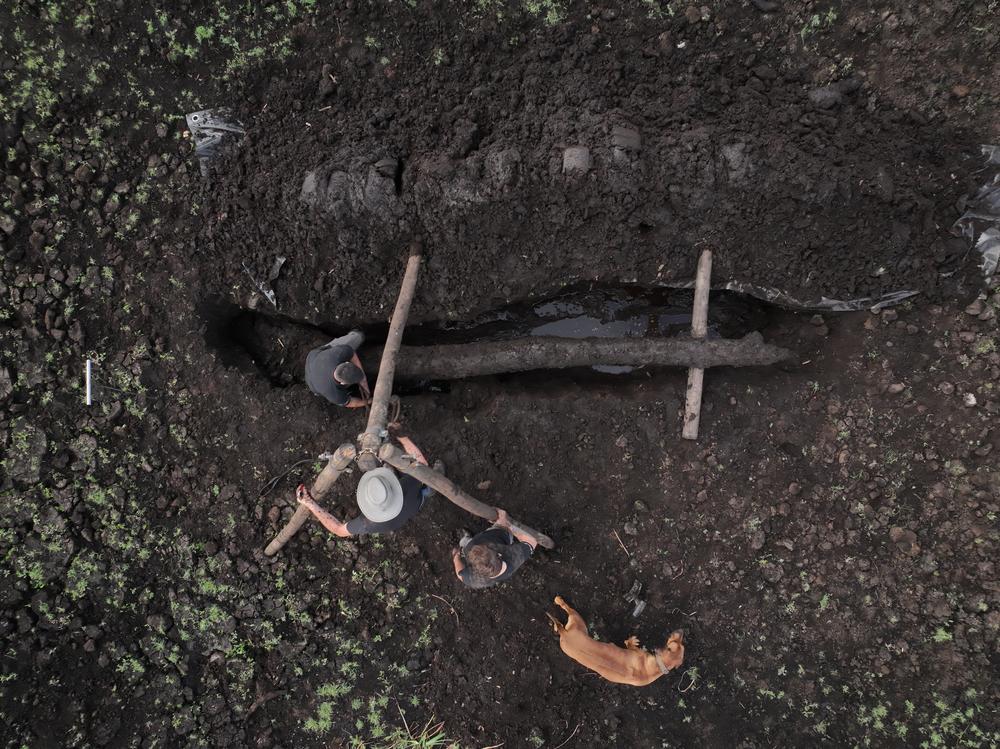
Reading time: Written by: Article outline CIRAM recently dated two pieces of fossilized wood: a “morta” oak and a marsh yew. Both were found buried in the same place…

Since 2005, CIRAM supports has been revolutionizing science in the service of art, industry and archaeology, by offering high-precision analysis.
Contact our teamsFounded in 2005 by Richard Chéret and Olivier Bobin, CIRAM supports was created with a strong ambition: to make analytical sciences accessible to art market players. art marketart archaeologists and manufacturers. At a time when few laboratories offered a multidisciplinary approach, CIRAM supports stood out for its ability to combine scientific expertise with a keen understanding of business issues.
The company has rapidly expanded internationally, with the creation of CIRAM Corp in New York in 2011, followed by a strategic partnership in Hong Kong in 2012.
In 2014, the construction of the headquarters in Martillac, near Bordeaux, marked a new stage, equipping the laboratory with cutting-edge technical resources to respond to ever more ambitious projects.
As of 2017, CIRAM supports is doubling the capacity of its materials analysis laboratory and inaugurating a state-of-the-art carbon-14 dating laboratory. To meet the ever-increasing demand, we have also doubled our radiocarbon production capacity in 2022, then tripled it in 2024.
The year 2025 marks the launch of our laboratory expansion, adding an additional 500 square meters. The construction work, along with the complete renovation of our facilities, will be completed in September 2026.
In 2026, CIRAM also expanded its technical capabilities with the addition of the Ionplus AMS LEA (Zurich, Switzerland), an accelerator mass spectrometer designed exclusively for radiocarbon analysis. The laboratory thus became the only private entity in Europe to possess this technology.
Discover our laboratory

Our Martillac laboratory is a unique site in France, specifically designed to accommodate sensitive and complex analyses. Thanks to a stimulating scientific environment, close to the University of Bordeaux and renowned research centers, CIRAM supports cultivates excellence on a daily basis.
Every year we invest in cutting-edge technologies such as :
Our strength also lies in our multi-disciplinary team of experts , at the crossroads of scientific research, engineering and field expertise. This synergy guarantees rigor, speed and customized support for every customer.
Discover our team
At CIRAM supports, each analysis is conducted according to standardized protocols and recognized internationally. Our methods meet the requirements of the following standards:
These repositories guarantee the traceability, reliability, and reproducibility of the results produced by our laboratory. They assure our clients of the security of work compliant with international standards, whether within the framework of a artistic expertise, of a Archaeological research : or of a Industrial certification procedure.
Discover our accreditations
Reading time: Written by: Article outline CIRAM recently dated two pieces of fossilized wood: a “morta” oak and a marsh yew. Both were found buried in the same place…
Choosing the right dating method in archaeology is not just a technical issue: it is a key decision that guides the entire interpretation of a site. Which technique to choose...
How can we retrace the invisible history of ecosystems and better understand the dynamics of biodiversity? Thanks to carbon-14 dating, researchers now have a scientific tool that they can use to...
Distinguishing a work of art in bronze from one in brass is not possible at a glance, however expert. Deceptive patinas, invisible restorations, sophisticated forgeries...
How do you know whether a work of art, an archaeological object or a heritage item is really as old as it claims to be? Carbon-14 dating is often the method of choice, but it can also be used to...
A simple signature can make the difference between an anonymous work and a masterpiece valued in the millions on the art market. But what happens when that signature is...