Characterization techniques
Characterization of organic materials

Characterization of organic materials

Visit organic materials play an essential role in understanding ancient objects, whether it's a question of identifying components (binders, varnishes, waxes) or organic residues absorbed into archaeological objects.

CIRAM supports combines different techniques depending on the type of material and the purpose of the analysis:

  • Raman and FTIR Spectroscopy (non-destructive), allows for rapid identification of chemical families without altering the object.
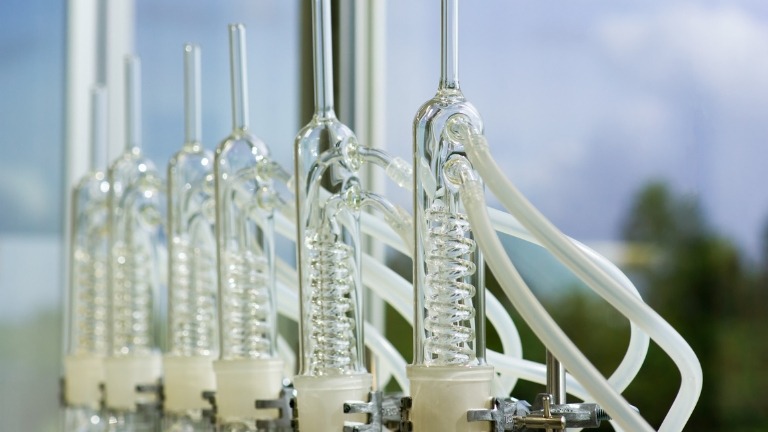
  • Chromatography coupled with mass spectrometry (GC-MS), ideal for breaking down and characterizing complex mixtures (old varnishes, binders, waxes, etc.).
  • Elemental and isotopic analysis (EA-IRMS) to trace the organic origin (plant or animal) of a material and quantify its biobased content, particularly in the context of ISO 16620-2….

Analyses are carried out on micro-samples (a few milligrams), with great precision.

Contact our teams

Organic materials characterization applications

01 - Study of organic residues in archaeology

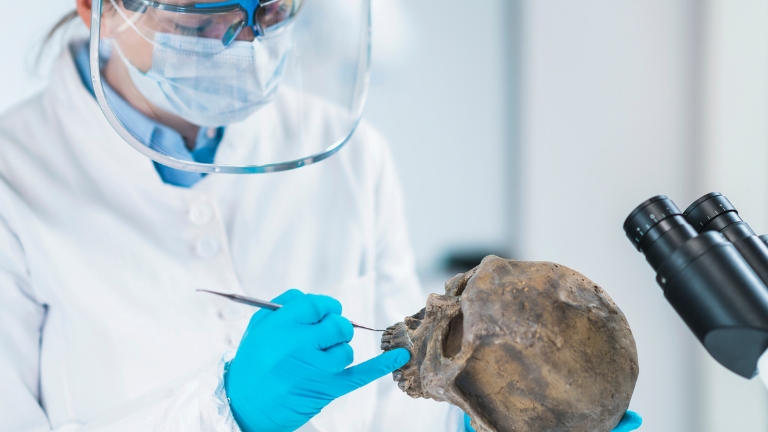
Analysis of organic residues on artefacts (ceramics, tools, ritual objects) enables the reconstruction of ancient practices: diet, body treatment, rituals, craftsmanship. By identifying compounds such as fatty acids, resins, waxes or proteins, archaeologists gain valuable functional information about past civilizations.

  • GC-MS and FTIR are the reference methods for revealing and identifying these minute traces.
  • EA-IRMS can confirm the plant or animal origin of certain compounds.
Read more

02 - Authentication and conservation of works of art

Visit binders, varnishes and waxes used in works of art are chemical markers revealing an era, a workshop or a restoration. CIRAM supports identifies these materials and compares them with internal and scientific databases to detect inconsistencies or modern restorations.

  • These analyses can help to authenticate a workidentify an original painting technique or detect undocumented later additions.
  • They also guide restorers in the choice of materials compatible with the object.
Read more
Illustration of a sustainable city featuring icons for bio-based products, recycling, and renewable resources

Microanalysis of stones, glass and pigments

The microanalysis consists of studying the chemical composition and mineralogical properties of materials at the microscopic scale. It allows for the identification of the constituent elements of stones, glasses, ceramics, pigments and mineral deposits, and to understand its origin, transformation, and alteration.

At CIRAM supports, this approach is based on high-resolution analytical instruments such as :

  • The scanning electron microscope coupled with energy-dispersive spectrometry (SEM-EDX),
  • The inductively coupled plasma mass spectrometry (ICP-MS),
  • The X-ray diffraction (XRD),
  • The Raman spectroscopy.

CIRAM supports uses microanalysis in projects involving authentication, conservation-restoration, archaeometry and the industrial traceability of materials.

Contact our teams

Microanalysis characterization applications

01 - Study of origins and manufacturing techniques

Thanks to material's chemical signature, it is possible to trace its geological origin or reconstruct the manufacturing processes used. These data are essential for :

  • Identify a workshop or production area,
  • Detecting mixtures or imitations,
  • Understand the technical choices made by ancient craftsmen.

02 - Analysis of weathering and deposits

Archaeological objects often have mineral deposits (crusts, efflorescences, patinas), the nature of which provides information about their conservation environment. CIRAM supports analyzes these layers to :

  • Assess weathering processes,
  • Guide conservation decisions,
  • Understand the interactions between the object and its environment.
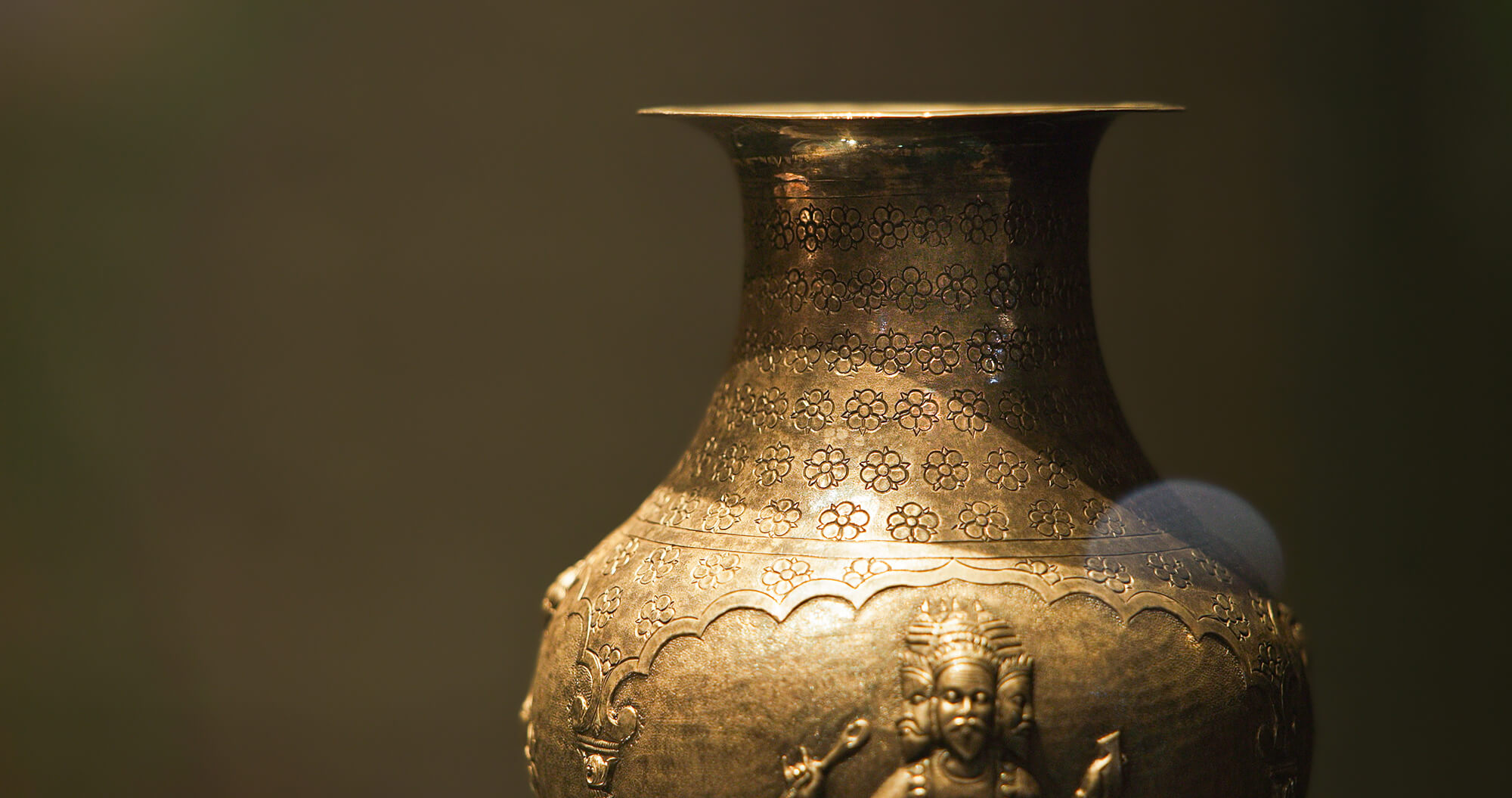
Ancient Indian copper artifact

Metallographic characterization

The metallography enables in-depth study of the composition, structure and manufacturing processes of ancient metal objects. It is essential for identifying alloys, detecting modern elements, analyzing patinas and understanding alterations.

At CIRAM supports, this analysis is based on complementary techniques:

  • SEM-EDX (scanning electron microscopy with energy dispersive spectrometry), to visualize microstructure and map chemical elements at high resolution,
  • ICP-MS (inductively coupled plasma mass spectrometry), to detect and quantify trace elements, often decisive for authentication.

This approach allows to authenticate an objectcertification To characterize its manufacturing, and to guide conservation or expertise actions, by cross-referencing chemical and historical data.

Contact our teams

Metallographic characterization applications

01 - Copper, silver, brass

For copper alloys (bronze, brass) or the silver objectsdating, metallography allows for the detection of exogenous elements often indicative of modern manufacturing, such as aluminum, chromium, or manganese. These markers, absent from ancient alloys, frequently betray recent production or an attempt at counterfeiting.

Analysis of patina, whether natural (formed over the long term by atmospheric corrosion) or artificial (created by chemical processes), reveals valuable chronological clues for date an old work.

Finally, the study of the metal's microstructure can reveal its shaping techniques: molding, hammering, annealing or welding.

02 - Iron and gold

Visit iron objects present particular challenges due to their high sensitivity to corrosion. The metallography then focuses on the analysis of non-metallic inclusions and internal impurities, revealing ancient forging processes. The absence of certain treatments or the presence of characteristic inclusions makes it possible to distinguish ancient artisanal production from a modern object.

To gold, which is not very susceptible to oxidation, characterization is based on the detection of trace elements (lead, bismuth, tin, etc.), whose concentrations may betray a chronological or geographical origin. These data are decisive in the attribution, appraisal or certification of works in precious metals.

Read more

Laboratoires CIRAM, world leader in characterization

For over two decades, CIRAM has been a key player in the scientific analysis of ancient materials, both on the art market and in the archaeology and industry. Its expertise is based on a unique combination of scientific rigor, state-of-the-art analytical equipment and a multidisciplinary team of PhDs in physics, chemistry, geosciences and materials.

Each analysis project benefits from a tailor-made protocol, designed to meet the customer's specific needs: study of the conservation of an art objectindirect dating, corrosion studies or validation of an industrial process.

Recognized by museums, auction houses, excavation operators and manufacturers, CIRAM supports s approach guarantees the analytical reliability and legibility of results that have become benchmarks in Europe and worldwide.

Are you asking yourself these questions?

What is materials characterization?

The characterization of materials involves analyzing their chemical composition, structure and state of preservation in order to determine their origin, manufacture and age.

What types of materials can be analyzed?

Our laboratories study a wide variety of materials, including ceramics, stone, glass, metals, wood, ivory, paper and antique textiles.

Why is characterization essential?

It allows us to identify the origin of materials, analyze manufacturing techniques and establish chronologies, thus providing a better understanding of the artifacts.

What are the main techniques used in characterization?

We use scanning electron microscopy (SEM-EDX), Raman spectrometry and X-ray diffraction.

How long does it take to get the results of a characterization?

Analysis times vary according to the nature of the object and the techniques used. On average, an analysis can take from a few days to several weeks. A precise timetable is provided at the time of acceptance.

Make an appointment with an expert

Get all the answers to your questions!

Make an appointment

Explore our dating and analysis resources

Archaeology
Fossilized wood samples dated by CIRAM lab

Fossilized wood samples dated by CIRAM lab

Reading time: Written by: Article outline CIRAM recently dated two pieces of fossilized wood: a “morta” oak and a marsh yew. Both were found buried in the same place…

Read the article

Archaeology
Comparison between carbon-14, TL, and OSL: which method should you choose?

Comparison between carbon-14, TL, and OSL: which method should you choose?

Choosing the right dating method in archaeology is not just a technical issue: it is a key decision that guides the entire interpretation of a site. Which technique to choose...

Read the article

carbon-14
How carbon-14 analysis helps preserve biodiversity

How carbon-14 analysis helps preserve biodiversity

How can we retrace the invisible history of ecosystems and better understand the dynamics of biodiversity? Thanks to carbon-14 dating, researchers now have a scientific tool that they can use to...

Read the article

Art market
How to recognize bronze and differentiate it from brass?

How to recognize bronze and differentiate it from brass?

Distinguishing a work of art in bronze from one in brass is not possible at a glance, however expert. Deceptive patinas, invisible restorations, sophisticated forgeries...

Read the article

Archaeology
The limits of carbon-14 dating: when should we turn to other methods?

The limits of carbon-14 dating: when should we turn to other methods?

How do you know whether a work of art, an archaeological object or a heritage item is really as old as it claims to be? Carbon-14 dating is often the method of choice, but it can also be used to...

Read the article

Art market
How to recognize a forged signature on a painting?

How to recognize a forged signature on a painting?

A simple signature can make the difference between an anonymous work and a masterpiece valued in the millions on the art market. But what happens when that signature is...

Read the article

Request a quote