
Visit stable isotopes play an essential role in the traceability and quality of industrial products and more particularly in the agri-food industry.
In this article, we explore the world of stable isotopes, from their crucial role in fraud detection to verifying the geographical origin of products. Find out how the analysis techniques used by specialized laboratories can help meet the industry's compliance and safety challenges.
Stable isotopes: definition and challenges for industry
Visit stable isotopes have become essential in industrial sectors by offering solutions to ensure product traceability and integrity.
Stable isotope: definition and function
One stable isotope is a non-radioactive form of an atom that retains its structure over time. Unlike radioactive isotopes, it does not decay. The stable isotopes, notably of the carbon, nitrogen, oxygen, and hydrogen allow tracing geographical origins or defining a botanical origin.
Stable isotopes such as carbon-12 and carbon-13 are particularly useful for analyzing the composition of food and industrial products. Their analysis using techniques such as mass spectrometry ratio mass spectrometry enables us to determine the isotopic signature specific to each environment, making it easier to identify the origins and processes undergone by raw materials. More specifically, thestable carbon isotope can be used to understand biogeochemical cycles and identify botanical origins.
Industrial applications of stable isotopes
Visit stable isotopes offer a reliable way to ensure product traceability in the supply chain for industry professionals. For example, in the agri-food sector, these isotopes are used to determine if a product actually comes from the claimed region (geographical origin) or to identify fraud, such as a alteration of the composition of a dairy product.
Thestable carbon isotope varies according to the type of plant photosynthesis: C3 plants (rice, cotton, wheat) have a δ13C below -20 ‰, while C4 plants (grass, corn, sugarcane) have δ13C between -10 and -20‰. In practical terms, this makes it possible to detect adulterations, such as the addition of high-fructose corn syrup in honey.
Stable isotopes in the fight against fraud and traceability
Stable isotopes are an invaluable weapon in the fight against product adulteration and falsification, and in verifying the origin of products.
Detecting adulteration with stable isotopes
Theproduct adulterationadulteration, whether of origin or quality, is a critical issue for manufacturers. They can detect whether a product has been mixed or adulterated using stable isotope analysis. It is thus possible to analyze the isotopic composition of a sample to check whether it conforms to its declared origin, using stable isotopes of carbon.
For example, δ13C analysis can detect the addition of sugar to fruit juice. An abnormally low δ18O can indicate the addition of water to wine, for example. In addition, δ2D analysis can be used to distinguish orange juice adulterated with beet sugar.
Stable isotopes for traceability of origin
Visit stable isotopes offer to the industry professionals a reliable solution for tracing the precise geographical origin of products. Environmental conditions, such as altitude, temperature, or soil type, influence isotopic signatures. For example, the δ18O makes it possible to differentiate coffee from Africa from that of South America. These analyses are also applied to natural vanilla.
These isotopic analysis can also be used to detect fraudulent practices, such as substituting products from one region for those from another. Product traceability thus becomes a lever for quality and transparency for manufacturers, enabling them to comply with international standards and guarantee customer satisfaction.
The importance of analytical laboratories for industry
CIRAM supports plays a central role in the application of these techniques, by carrying out laboratory quality control operations to verify the authenticity, conformity and origin of raw materials.
The role of laboratories in isotope analysis
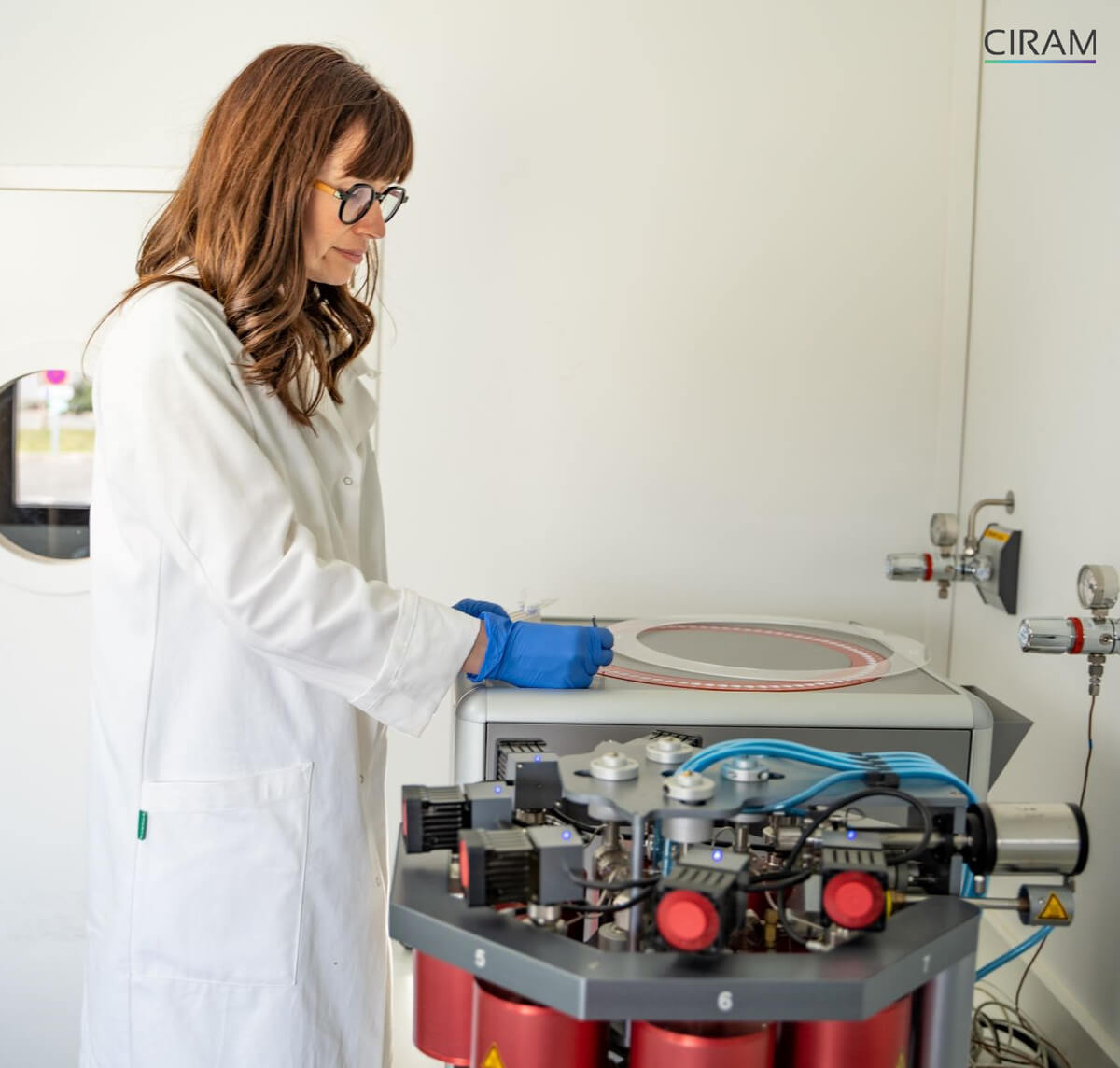
Visit specialized laboratories, such as CIRAM, use cutting-edge technologies to perform precise and reliable isotopic analyses. Their sophisticated equipment, such as the Isotope ratio mass spectrometry (IRMS), allow for the isolation and measurement of stable isotopes in varied samples, from industrial products to foodstuffs.
Benefits for manufacturers: safety, compliance and optimization
For manufacturers, working with a laboratory specializing in stable isotopes offers many advantages. These analyses guarantee product compliance with international regulations and avoid the risks associated with fraud. They also optimize the traceability of supply chains, giving companies total control over the origin and quality of their raw materials.
By working with a laboratory like CIRAM, industrial companies can ensure their market presence by offering products whose authenticity and quality have been scientifically verified.
Visit stable isotopes are therefore essential for guaranteeing the traceability, quality, and authenticity of industrial products. Whether for fraud detection criteria or verification of geographical origin, these analyses offer reliable solutions for industry professionals.
Specialized laboratories like CIRAM supports play a crucial role in the application of these techniques, thanks to their advanced equipment and expertise. If you need to secure your products and optimize your processes, request an analysis with CIRAM today.