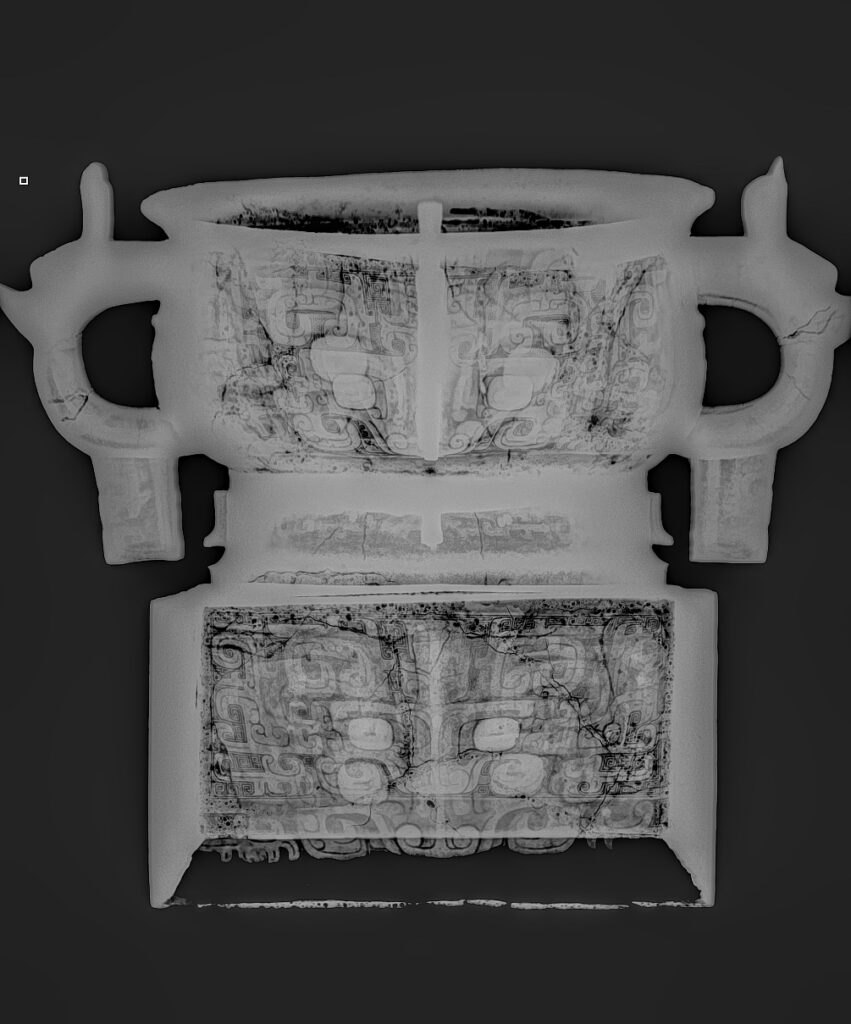
To authenticate a piece of porcelain, be it Chinese, the information sought is the age of manufacture of the support material. The most suitable tool for this investigation is thermoluminescence or the TL test. Like all dating methods, it can be used to date an event. In the case of TL, this is the last heat recorded by the material. As a general rule, this will be the firing of the material following its shaping.
The properties of thermoluminescence
The phenomenon of thermoluminescence and its applications have been known and widely described for several decades. Thermoluminescence properties are directly linked to the presence of crystals (mainly quartz) in terracotta. Quartz has the basic chemical formula SiO2. This means that quartz is composed of silicon and oxygen. On an atomic scale, a quartz crystal is a stack of small four-sided pyramids (tetrahedrons) in which there is an oxygen atom at each vertex, and a silicon atom in the middle of the pyramid. The oxygen atoms are shared with the adjacent tetrahedrons. This forms the basis of a perfect crystal. However, this crystal lattice contains defects: gaps, substitutions and the presence of interstitial ions. The existence of these defects is fundamental to TL dating, as they are capable of storing energy. These defects are filled by a steady supply of energy over time. This energy comes from natural radioactivity. As radioactivity is a regular phenomenon, it is correlated with the passage of time. As a result, the more time passes, the more energy is added to the crystals. In the laboratory, we heat the material and record and quantify luminescence (light emission). The amount of light emitted is proportional to the energy stored in the crystals, itself proportional to the time elapsed since the terracotta was manufactured.
Thermoluminescence method detects fake porcelain
Porcelain, like earthenware and stoneware, is fired at very high temperatures during manufacture. This high temperature results in partial or total amorphization (vitrification) of the material. Exposure to high temperatures alters the crystalline lattice, destroying the trapping centers or defects that store radioactive energy. This deprives us of all or part of the information we're looking for, making the material difficult to date by thermoluminescence. However, by adapting the TL measurement protocol, we can date virtually all porcelain. Whereas conventional thermoluminescence heats the material to 500°C, the alternative predose technique only heats to 200°C and focuses on a low-temperature signal at around 110°C.
The predose protocol is really dedicated to porcelain and earthenware, as it is the only way to obtain a date on this type of material heated to high temperature.
The development of counterfeiters' techniques has made thermoluminescence an indispensable tool for detecting fakes. However, as we saw in a previous article, TL tests must be combined with X-ray imaging (radiography or scanner) to detect new fakes.
The chemical analysis of a painting involves identifying the materials that make up the paint layer: pigments, binders, varnishes, and mineral fillers. This information provides a better understanding of the techniques used, verifies whether the materials are consistent with the painting’s presumed date of creation, and reveals any restorations or forgeries.
In this article, learn how the materials in a painting are analyzed, what techniques are used, and what these analyses actually reveal.
In summary:
Chemical analysis identifies the pigments, binders, varnishes, and mineral fillers in a painting.
It makes it possible to verify whether the materials are consistent with the work’s presumed period of creation.
When combined with carbon-14 dating and scientific imaging techniques, it helps authenticate paintings.
The results should always be interpreted in light of historical and artistic knowledge.
What Chemical Analysis of a Painting Reveals
Chemical analysis is not limited to identifying pigments. It allows us to study all the materials that make up the paint layer in order to better understand how a work was created, to verify that the materials are consistent with the period in which it was made, and to identify any restorations.
This analysis alone does not always allow us to draw conclusions about a painting’s authenticity. That is why it is generally combined with carbon-14 dating of the supports and various scientific imaging techniques.
Chemical analysis of the pigments provides important chronological information that complements the dating of the support. This study has been facilitated by the discovery of numerous synthetic pigments in the 19th and 20th centuries. For example, the discovery of lithopone white (barium sulfate and zinc sulfide) in 1870 and phthalocyanine green in the 1930s. The use of chromium oxide as a green pigment from 1840 onwards, for example, or the manufacture of titanium white (titanium oxide), which began in the 1920s.
However, these investigations also have their limitations: natural pigments don't provide any real chronological information, as in the case of ochre, which was used for the Lascaux cave paintings and is still widely marketed today.
Binders
Binders ensure that pigments hold together and adhere to the support. Identifying them provides insight into the painting technique used by the artist (oil, tempera, wax, etc.) and can sometimes help confirm the period in which a work was created. Certain modern binders also serve as an indication of restoration or a more recent creation.
Nail Polish
Varnishes protect the surface of a painting and alter its appearance. Analyzing them makes it possible to distinguish between the original layers and varnishes applied during later restorations. It also provides information on the work’s state of preservation and guides the decisions made by conservators.
The main analytical methods used in the laboratory
Depending on the materials present and the objectives of the study, several analytical techniques can be used:
Technique:
What it does:
Optical Microscopy
Examining the layers of paint
SEM-EDX
Identify the chemical elements
Raman
Identify the pigments
IRTF
Identify organic and mineral compounds
GC-MS
Identify binders and varnishes
Most of these analyses are conducted without altering the artwork. Find out why non-destructive analyses are preferred for the study of works of art.
Some examples of table analysis
One example is the study of a painting attributed to an illustrious painter of the late 19th century, which was carried out in two stages. Carbon-14 dating of the support gave a date compatible with the painter's activity, and pigment analysis led to a similar conclusion, since the pigments detected were known in the 19th century and had been found in other works by this artist. Among the pigments detected were vermilion red, copper arsenate green, zinc white and ochre.
Conversely, analysis of a work dated 1920 revealed that it was a forgery. The presence of rutile titanium white—which was first produced in the late 1940s—was, in fact, a definitive indication of its modern origin.
Finally, the analysis of a 15th-century illuminated parchment proved more complex, as carbon-14 dating had confirmed the age of the support, but the pigments turned out to be modern (lithopone, titanium white, ultramarine blue, cadmium red...). In reality, it was an "intelligent copy" made on old paper. It is therefore essential to combine dating and analysis techniques to detect forgeries.
Chemical analysis is an essential step in the scientific study of paintings. By identifying pigments, binders, varnishes, and other materials, it provides valuable information about a work’s creation, history, and authenticity. Combined with carbon-14 dating and scientific imaging techniques, it offers a more comprehensive understanding of the materials and contributes to a reliable scientific assessment.
Share this article
Richard Cheret
Richard holds a master’s degree in chemistry (1999) and a master’s degree in the physics of archaeomaterials (2000) from the University of Bordeaux. In 2005, he co-founded the CIRAM laboratory with Olivier Bobin, and today serves as its co-manager and sales director.
You may be wondering about these questions regarding the analysis of the materials used in paintings?
Why analyze the pigments in a painting?
Pigments can provide valuable chronological clues. Some synthetic pigments were not commercially available until the 19th or 20th century. Their presence on a work believed to be older may indicate restoration or forgery.
Can chemical analysis be used to authenticate a painting?
Not on its own. Chemical analysis provides information about the materials, but its results must be cross-referenced with those from substrate dating, scientific imaging techniques, and historical expertise in order to reach a reliable conclusion.
Do chemical analyses require a sample to be taken?
Some analyses require a micro-sample, taken from a specific area of the artwork. The sample is extremely small and tailored to the objectives of the study in order to minimize its impact on the painting.
Need more information or have a question?
Our team will get back to you as soon as possible.
Along with carbon-14 dating, thermoluminescence testing (TL testing) is the most widely used technique for scientifically authenticating art objects. CIRAM laboratories combine thermoluminescence (TL test) with X-ray scanner imaging to detect fakes in authentic works of art. A look back at the methods used by CIRAM laboratories.
Complementary methods for authenticating terracotta works
The development of counterfeiters' techniques, combined with their growing understanding of analytical authentication techniques, means that thermoluminescence and carbon-14 are increasingly necessary, but not sufficient. These dating methods provide an initial chronological assessment of the material's age. However, it is becoming increasingly common for counterfeiters to use old materials, which they then reshape to produce fakes.
Fortunately, CIRAM refines the authentication of your works of art by adding complementary analyses such as X-ray scanner imaging.
Examples of new forgeries and methods for detecting them
Thermoluminescence tests carried out on several samples of this head seemed to indicate that the material was fired around 1000 years ago. However, while the results obtained on the various samples were consistent, their characteristics were sufficiently heterogeneous to arouse suspicion. Thanks to the 3-dimensional vision generated by scanner imaging, we can see that this head is made up of an agglomerate of ancient terracotta shards re-cut and assembled with modern clay. The face has been over-modelled on top of the shards. This object falls into the category of "intelligent fakes". This involves using ancient materials to fool thermoluminescence tests. In this case, only a combination of different methods can detect new-generation counterfeits.
Counterfeiters, reading more scientific publications than one might imagine, have unfortunately become more sophisticated in their methods. Aware that the study of corrosion was becoming a major factor in the analysis of a work, some set about creating forgeries mixing old and modern parts.
Aware of this new trend, CIRAM's laboratories are combining methods to refine their analyses and identify new intelligent fakes.
On the X-ray image below, you can see the old part at the bottom and the modern part made of small metal plates assembled with glue or resin.
To identify these assemblies, it is necessary to X-ray the objects, in order to be able to specify whether they have only been restored or whether they are the result of a modern assembly. Once again, we can see that complementary methods are the best discriminating analytical strategies.
Complementary analyses to detect new forgeries
Thanks to factual data derived from physico-chemical analysis, correlation with accumulated knowledge of the evolution of forms, and techniques to support the quest for authenticity, it is possible to authenticate a terracotta work.
To make a precise diagnosis, our scientists always propose a combination of clues, while remaining aware of the limits of each approach. If certainty is the absolute goal of authentication, it is rarely attainable. However, the detection of a fake will always be more obvious than the certainty of an authentic object. But thanks to our expertise and know-how, the result will always be reliable, objective and relevant.
As with rocks or metal, there is no dating method for glass or enamel as such. But the multi-criteria, multi-disciplinary approach of the CIRAM laboratories enables us to give an opinion on the age of your glass objects.
A precise analytical protocol for studying glass objects
For the study of art objects, the first and most obvious type of marker is the chemical composition of the material. Secondly, CIRAM laboratories observe the passage of time and induced alteration. The composition of materials must correspond to the manufacturing techniques of the time. For weathering, the degradation of materials must be of natural origin.
The chemical composition of glass, the first decisive marker
The chemical composition of glass or enamel is a valuable source of chronological information: vitrifiers, stabilizers, fluxes or pigments, the results already provide valuable information.
The composition of a glass, enamel or glaze can be indicative of an era or civilization. For example, lead and potassium concentrations will indicate whether the glassmaking technique corresponds to the Middle Ages or the Renaissance. The nature of the pigments can identify modern production. Cadmium or chromium date 19th or 20th century glass or stained glass.
Our scientists analyze the chemical nature of the glass and the chromogenic elements present to already provide objective data that our laboratory teams interpret to pronounce on the age of the glass objects.
Glass weathering analysis, a crucial step
The most important part of examining a glass object is analyzing its weathering. A glass object that is hundreds or thousands of years old will have undergone significant environmental alteration, due to humidity, temperature variations and the development of micro-organisms. The degree of weathering provides chronological clues as to age or modernity. Glass weathering depends not only on the environment in which it is stored, but also on its composition. If conditions are highly alkaline, then the silica contained in the glass may be progressively dissolved, leaving a dull surface. Under more neutral, slightly alkaline or acidic conditions, glass corrosion is characterized by the progressive elimination of alkaline ions (leaching), sodium and potassium, as well as certain alkaline-earth ions (notably calcium). These are replaced by water and hydroxide ions, OH-. These processes give the surface an onion-skin appearance (laminated multilayers), which may appear iridescent due to the diffraction of light by this microstructure.
Detecting falsification through the presence of fluorine
On the other hand, if fluorine is detected in altered areas, we're dealing with artificial, modern alteration, i.e. incompatible with an ancient period. In fact, the presence of fluorine is totally abnormal in the context of natural burial or the natural ageing process of glass. Fluorine is not present in natural groundwater, as it reacts strongly with calcium to form insoluble minerals. As calcium is one of the most abundant elements in soils, the possibility of observing certain soluble fluorine ions is extremely limited. This means that fluorine cannot come from environmental pollution.
The presence of fluorine is highly problematic, as it indicates that the object has been artificially altered with hydrofluoric acid or a fluorine-rich compound, in order to simulate glass ageing. This acid is the only one capable of dissolving glass. It cannot be used for cleaning or restoration purposes. Consequently, the presence of fluorine in "weathered" areas of glass is a formal indication of modernity.
Micro-analysis to distinguish between forgeries and original works
Microanalysis remains little-known, as it does not provide direct chronological indicators like carbon-14 dating, for example. However, this technique is the most suitable tool for discriminating between fakes and authentic items, particularly for glass and enamel items that do not lend themselves to direct dating methods. It is important to combine all information to authenticate a glass or enamel object.
The answer is yes, but only partially. We can only date the organic materials it is made of, such as canvas, wood, or paper. We cannot date the pigments, and it is sometimes difficult to date the varnish.
In summary:
Carbon-14 dating is used to date the organic materials that make up the painting, while thermoluminescence dating is used to date materials that have been heated. Pigments, therefore, cannot be dated using these methods.
Dating must be supplemented by material analysis, scientific imaging, and historical expertise.
Combining these methods makes it possible to authenticate works of art and identify counterfeits.
The scientific approach based on materials is transchronological. This method is an essential step in authentication, but it must be supplemented by other scientific analyses. There are two dating methods used by CIRAM laboratories:
Carbon-14 datingis used exclusively for organic materials: wood, paper, ivory, bone, leather, and textiles
Not all materials used in a painting can be dated using carbon-14, as shown in the table below:
Materials used in the painting:
Carbon-14 dating:
Fabric (linen, hemp, etc.)
Yes
Wood
Yes
Paper
Yes
Cardboard
Yes
Ivory
Yes
Varnish
Yes: if they are natural and contain organic matter No: if they are synthetic or mineral in origin
Pigments
No
Why isn't carbon-14 dating sufficient to authenticate a painting?
Please note that the date on a work’s medium does not automatically correspond to the date the work was created.
When studying paintings, various imaging techniques—such as those using natural light, raking light, ultraviolet (UV) light, or infrared (IR) reflectography—complement conventional dating methods. However, one problem remains: how can we analyze materials that cannot be dated, such as the pigments used in paintings?
An anthropological and historical approach to complete the results
Historical knowledge of pigment manufacturing techniques will provide chronological data: the use of chromium oxide as a green pigment from 1840 onwards, for example, or the manufacture of titanium white (titanium oxide), which began in the 1920s. These investigations also have their limits: natural pigments provide no real chronological information, as in the case of ochre, which was used for the Lascaux cave paintings!
How is a painting dated?
Dating a painting begins with identifying the materials it is made of in order to determine which ones can be analyzed. A very small sample is then taken from an organic material, such as canvas, wood, or paper. After measuring the carbon-14 levels and calibrating the results, the data obtained are interpreted by comparing them with pigment analyses, scientific imaging, and historical knowledge.
The principles of carbon-14 dating
Carbon-14 dating measures the time that has elapsed since the death of a living organism. Just as death brings human life to an end, a plant’s life ends when it is harvested. For a painting, this corresponds to the time when the flax or hemp used to make the canvas was harvested or when the tree used for the support or frame was felled.
The principles of carbon-14 dating are based on the instability of the carbon-14 isotope. A living organism contains a constant amount of carbon-14 due to exchanges with the atmosphere (respiration or photosynthesis). When the organism dies, these exchanges with the outside world cease, and the amount of carbon-14 then decreases according to a known exponential rate. Its concentration is halved every 5,730 years. The dating limit is approximately 60,000 years. Beyond that, the amount of carbon-14 is too low to be measured by current techniques.
This revolutionary technique earned its inventor, Willard Frank Libby, the Nobel Prize for Chemistry in 1960.
Carbon-14 variation over time, an important factor to take into account
Carbon-14 dates are expressed in years “Before Present” or “BP.” The “present” for carbon-14 was set at 1950 by Libby. Today, however, these values must be corrected because the concentration of carbon-14 has varied over time due to factors such as solar activity, climate change, and industrial activity. These results are referred to as calibrated results, obtained using calibration curves. These curves allow the BP age to be converted into calibrated date ranges associated with a probability percentage (for example, 450 ± 25 years BP corresponds, after calibration, to the range 1422–1471 AD—with a 95.4% probability).
The onset of industrial activity, for its part, led to a decline in Carbon 14 levels and imposed limits on the precision of measurements. Conversely, atmospheric nuclear testing has led to an artificial rise in Carbon 14 levels worldwide. This makes it possible to obtain very precise dates (up to one or two years) for the second half of the 20th century.
Some examples of paintings dated and authenticated by carbon 14
The following examples illustrate how carbon-14 dating can reveal chronological inconsistencies, but also why it must always be cross-checked with other scientific analyses.
In art history, cases of forgery are common, and it is often through a thorough analysis that inconsistencies have been uncovered. Here are two examples:
A painting by a Russian Suprematist painter, dated 1920, had its canvas support finally dated post 1954.
A Picasso composition proposed for dating in the early 20th century revealed, after dating the paper support, that the paper had been manufactured before 1954, and was therefore incompatible with the presumed period.
Generally speaking, it's much easier to prove that a painting is fake than to establish its authenticity:
The dating of a painting attributed to Van Gogh was carried out in two stages. Dating of the support suggested a date compatible with the painter's activity, at the end of the 19th century. Pigment analysis led to a similar conclusion, since the pigments detected were known in the 19th century and had been found in other works by Van Gogh. These included vermilion red, copper arsenate green, zinc white and ochre. However, these pigments were known and used by all painters at the same time, and even today. The Van Gogh committee, made up of art historians, had to decide in favor of an original work.
Conversely, analysis of a 14th-century illuminated parchment confirmed the dating of the support. As for the pigments, they proved to be modern... It was an "intelligent" copy made before 1950... on old paper. It is therefore essential to combine analytical techniques to detect forgeries.
Richard holds a master’s degree in chemistry (1999) and a master’s degree in the physics of archaeomaterials (2000) from the University of Bordeaux. In 2005, he co-founded the CIRAM laboratory with Olivier Bobin, and today serves as its co-manager and sales director.
You might be asking yourself these questions about dating paintings?
Can any painting be dated using carbon-14 dating?
No. Carbon-14 dating applies only to materials of organic origin. Mineral pigments and most varnishes cannot be dated using this method. Whether dating is feasible therefore depends on the materials from which the artwork is made.
How accurate is carbon-14 dating?
Accuracy depends on several factors: the nature and state of preservation of the sample, the period in which it was produced, and natural variations in atmospheric carbon-14. Results are expressed as calibrated date ranges associated with a statistical probability. For materials dating from the second half of the 20th century, the “bomb peak” method can sometimes achieve an accuracy of one to two years.
Why can't pigments be dated?
Most pigments used in painting are of mineral origin (ochre, azurite, vermilion, titanium white, etc.) and therefore do not contain organic carbon that can be measured using the carbon-14 method. They cannot be dated directly. However, their chemical composition serves as an excellent chronological marker: certain pigments were not produced or used until a specific period, and thus help verify the accuracy of an attribution.
Can carbon-14 be used to detect counterfeits?
Yes, in many cases. If the dating of a canvas, paper, or wooden support is inconsistent with the presumed date of the work’s creation, the hypothesis of a forgery can be substantiated. However, consistent dating alone does not prove a painting’s authenticity. The results must be cross-referenced with pigment analysis, scientific imaging, and historical expertise.
What is the difference between dating a painting and authenticating a painting?
Dating involves determining the age of one or more materials that make up the painting, such as canvas, wood, or paper. Authentication is a much more comprehensive process. It relies on a combination of several approaches: dating, material analysis, scientific imaging, provenance research, stylistic examination, and expertise in art history. Dating is therefore an essential element of authentication, but it is not sufficient on its own.
Up to what age can a painting be dated using carbon-14 dating?
The carbon-14 method can be used to date organic materials up to approximately 60,000 years old. This limit is far greater than the age of the painted works preserved today. In practice, the method is particularly well-suited for studying ancient paintings on canvas, wood, or paper, ranging from the medieval period to contemporary works, provided that the organic materials are sufficiently well-preserved to be analyzed.
Is the sample collection procedure destructive?
Yes, carbon-14 dating requires the removal of a sample. However, the amount of material removed is extremely small, and the sample is taken from an inconspicuous area of the artwork to minimize its impact. Before any work is done, the laboratory works with the owner or curator to determine the most appropriate sampling strategy.
Need more information or have a question?
Our team will get back to you as soon as possible.
For the sake of precision, it would be more appropriate to speak of tin-rich bronzes, arsenic-rich coppers, or tumbaga (copper-rich gold alloys used in pre-Columbian art).
Metals (especially copper alloys such as bronze) cannot be dated directly. So we have to look for exploitable chronological markers, such as technical clues that can provide indications of the object's authenticity. Our laboratories then interpret the results to authenticate the materials.
CIRAM laboratories, for a global approach to bronze objects
The most relevant approach for metal objects remains the observation and study of the chemical composition of alloys and their degree of corrosion (patina) using optical microscopy and scanning electron microscopy coupled with an elemental analysis system using energy dispersive X-ray spectroscopy (SEM-EDS).
What information is obtained from the chemical analysis of the metal?
The first important piece of information to emerge from microscopy concerns the metal's microstructure. A good understanding of the metal's microstructure provides valuable clues as to how the object was manufactured. For example:
The presence of dendrites characterizes a melt,
Flattened, aligned inclusions are evidence of hammering,
If this alignment is too perfect, it corresponds to a modern laminating process.
Examination of the internal structure can therefore reveal technological clues and, by extension, help to pinpoint the period of creation of the work in question. The same applies to the analysis of alloy composition.
Determining the age of an object by analyzing the composition of an alloy
The study of concentrations of copper, tin, zinc, lead, etc., while not sufficient to determine the age of an object, can be very useful in establishing its modernity.
For example, the presence of aluminum, phosphorus, chromium or manganese (from 0.2 to 0.3%) are formal signs of modernity. Of course, these elements are natural and have always been present on the planet, but their reasoned and deliberate use in the manufacture of metal alloys dates back to the end of the 19th century (and even the beginning of the 20th century for phosphorus).
Indeed, if we refer to the work published by the international scientific community, these elements have never been detected in ancient metals, except in trace amounts (of the order of 0.01%). Furthermore, aluminum cannot correspond to pollution originating from the melt core, for example, as pollution forms inclusions distinct from the metal, and these are not completely dissolved. What's more, aluminum never stands alone in a cast iron core, but is always associated with other elements: silicon in kaolinite; sodium, potassium or calcium in feldspars. So, if you detect 0.5% aluminium in brass, you'd have to detect silicon too, for it to be core pollution. And yet, this is never the case! This proves, if proof were still needed, that the presence of aluminium corresponds to the use of modern metals.
The same applies to phosphorus, manganese and chromium.
Examination for corrosion, or "patina
The final step in characterizing a metal object is to analyze its corrosion.
We usually talk about its patina. While this term implies a surface approach, the study of corrosion focuses in particular on the nature of surface corrosion products (the patina proper), but also on the development of corrosion processes within the alloy.
Why does the study of patina tell us how old an object is?
A copper or silver alloy that is several hundred years old will have been subjected to numerous environmental attacks: humidity, temperature variations, the development of micro-organisms... These elements will lead to the degradation of the metal, its corrosion. Among the most characteristic signs of corrosion of natural origin, developed over several centuries, we can cite the following:
Deep metal weathering;
Preferential degradation of copper-rich zones - which are the most fragile;
Multiple corrosion products (cuprite, azurite, malachite, atacamite, nantokite, tin oxide, etc.), a combination of sediments, or the absence of recurring chlorine or sulfur.
On the other hand, if the corrosion remains very superficial and parallel to the surface of the object, if the metal is attacked homogeneously or if chlorine is detected in all the corrosion products, we can establish that the alteration is artificial and modern. This false patina will therefore indicate that the object has been intentionally degraded, in order to simulate its age.
Finally, it's important to point out that even if an object has been heavily cleaned and its patina removed, microscopic study is still possible. Corrosion processes penetrate the material, leaving traces that even violent abrasion cannot remove.
It is crucial to bear in mind that the study of a metal's chemical composition and degree of weathering provides indirect technical and chronological clues. It is impossible to obtain quantifiable chronological information on metal. Consequently, we cannot tell the difference between an object made 2,000 years ago and one made only 1,000 years ago. These investigations will only enable us to assess the compatibility of the elements studied with the presumed attribution.
CIRAM, a specialist in the dating and authentication of your materials, offers a complete interpretation service. We share our results and discuss their interpretation with you, to explain the relevance of the research, particularly for metal objects.
Scientific analysis of a painting makes it possible to examine the materials it is composed of in order to shed light on its history, state of preservation, and authenticity. Today, it is an invaluable tool for restorers, curators, collectors, experts, and professionals in the art market.
At CIRAM, this approach is based on complementary methods: dating the supports, chemical analysis of pigments, binders, and varnishes, as well as various scientific imaging techniques. Cross-referencing these results provides a better understanding of a work’s creation, helps identify any restorations or inconsistencies, and provides objective evidence for the purposes of the expert assessment.
In summary:
Scientific analysis of a painting combines dating, chemical analysis, and imaging techniques to study the materials that make up the artwork.
Scientific imaging (visible light, ultraviolet, infrared, and X-rays) reveals the different layers of a painting, as well as restorations and alterations that are invisible to the naked eye.
These analyses make it possible to identify materials, assess the state of preservation, and provide useful information for authentication.
The interpretation of the results is based on cross-referencing scientific data with historical and artistic knowledge.
The Main Methods of Scientific Analysis of Paintings
To study a painting, several complementary approaches are used. Some allow researchers to date the materials, while others help identify their composition or reveal elements invisible to the naked eye. These methods are chosen based on the nature of the artwork and the questions being addressed.
Method:
What it allows us to study:
Dating of Media
Determining the Age of Organic Materials
Chemical Analyses
Identify the materials used and their historical consistency
Scientific imaging
View invisible layers, restorations, and modifications
Dating the Media
Dating the supports makes it possible to estimate the age of the organic materials that make up a painting, such as linen or hemp canvas, wood, paper, or cardboard. Performed primarily using the carbon-14 method, this process provides a valuable chronological reference for verifying the consistency between the materials used and the presumed period of the work’s creation. However, this analysis does not directly date the paint or the creation of the work, but rather the moment when the organic material ceased to be alive—for example, when the flax was harvested or the tree used as a support was felled. The results should be interpreted in conjunction with other scientific and historical investigations.
Chemical analyses make it possible to identify the composition of the various materials that make up the paint layer. These analyses focus in particular on pigments, binders, varnishes, and mineral fillers. They help verify whether the materials are consistent with the work’s presumed period of creation, detect certain restorations, and provide additional information to support dating and scientific imaging.
Scientific imaging provides valuable information about a painting. It allows for the examination of all layers of a painting—from the varnish to the support, including the preparatory drawing, the paint layers, retouches, overpainting, and any restorations. Natural light, ultraviolet, infrared, and X-ray imaging—discover the full range of imaging techniques used to analyze paintings.
These methods are completely non-destructive. Find out why this type of analysis is preferred for works of art.
Visible light imaging
We distinguish between three different types of visible light examination:
Visible light photography: produced under specific conditions, these images correspond to classic photography;
Grazing light photography: this type of photography reveals the state of conservation of the work's surface. Our scientists illuminate the work with a focused beam of light forming a 15° angle with its surface. This technique makes it possible to detect alterations to the paint layer (lifting, blistering, cracking, etc.), deformations of the support (poor tension of the canvas, cracks or joining of the boards) and alterations such as tears, scratches or dents. Grazing light also provides clues to the painter's techniques and style.
Transmitted light photography: this is used to observe the reverse side of canvas or paper paintings. With this method, our scientists can detect holes and tears, as well as alterations in the paint layers.
Ultraviolet (UV) radiation
Ultraviolet (UV) radiation lies outside the visible spectrum, and is divided into near UV (380nm to 200nm) and extreme UV (200nm to 10nm).
UV imaging enables the surface layer of the painting to be explored. It uses the fluorescence properties of the varnish, which are more or less intense depending on its composition and alteration. Overpainting on varnish or restorations can be easily identified.
Important: in the absence of varnish, some natural pigments may emit a colored fluorescence, a fact to be taken into account to avoid misinterpretation.
Infrared (IR) radiation
Infrared radiation ranges from 780 nm to 5 mm, beyond the visible spectrum but on the opposite side of the ultraviolet spectrum. The CIRAM laboratories use what is known as “warm” light, which falls within the near-infrared range. This makes it possible to measure the absorption of infrared radiation by the materials that make up the paint layers.
Thanks to infrared reflectography, our scientists can reveal preparatory drawings, repentirs and repaints. This imaging method produces grayscale images corresponding to varying degrees of interaction with the initial radiation.
X-ray radiography
X-ray radiography captures an image of the internal structure of a painting. The X-ray beam is directed onto the painting, and the X-rays transmitted are observed as a function of the selective absorption of the material. This absorption is linked to two parameters:
Through thickness
The density of the materials making up the object.
With this examination, it is possible to identify the damage caused by the passage of time, as well as anthropic actions of all kinds from the creation of the work to the present day. It is also possible to identify repaints and repentirs thanks to contrasts in material density.
Visible-light imaging is performed using a 10-megapixel SAMSUNG® EX2F digital camera equipped with a 24–80 mm f/1.4–2.7 lens.
Infrared reflectography imaging is carried out between 900 nm and 1700 nm using an OSIRIS HD Infra Rouge Opus Instruments Ltd® 16-megapixel digital acquisition system. The equipment used for X-ray radiography is portable, comprising a mano-medical HF 1060 high-frequency X-ray generator, a FUJI D EVO II digital acquisition sensor with automatic triggering and Bluetooth transmission (FDR D-EVO, 35 x 43 cm), and a computer for generator control and image processing (OSIRIX software). The acceleration voltages used are 40 kV, 50 kV and 75 kV. Parameters were controlled using Fujifilm® software.
Using this state-of-the-art equipment, CIRAM’s laboratories date and analyze your paintings, sculptures, and ethnographic and archaeological artifacts.
Share this article
Richard Cheret
Richard holds a master’s degree in chemistry (1999) and a master’s degree in the physics of archaeomaterials (2000) from the University of Bordeaux. In 2005, he co-founded the CIRAM laboratory with Olivier Bobin, and today serves as its co-manager and sales director.
You may be asking yourself these questions about the scientific analysis of paintings?
Why use multiple analytical techniques?
No single method can, on its own, answer all the questions raised by a work of art. Dating provides information on the age of the materials, chemical analyses identify their composition, and imaging techniques reveal the various layers of paint as well as restorations invisible to the naked eye. Cross-referencing these results allows for a more reliable interpretation and helps minimize the risk of error during the authentication or study of a painting.
What does an X-ray of a painting reveal?
X-ray imaging allows us to examine the internal structure of a painting. It highlights differences in the density of materials and reveals elements invisible on the surface, such as the artist’s corrections, repainting, certain restorations, the construction of the support, and alterations resulting from the work’s aging. It is a valuable tool for understanding the painting’s technique and material history.
How can you tell if a painting has been restored?
Restorations can be identified using several complementary methods. Ultraviolet light imaging often reveals repainting and certain varnishes, while infrared reflectography and X-ray imaging make it possible to observe interventions carried out beneath the visible surface. Chemical analyses of the materials complement these observations by identifying substances or pigments that are incompatible with the work’s presumed period of creation.
Does scientific analysis replace the expertise of an art historian?
No. Scientific analysis provides objective data on a work’s materials, production techniques, state of preservation, and chronology. On the other hand, attributing a painting to an artist, studying its style, provenance, or historical context are matters for art historical expertise. These two approaches are complementary, and comparing them allows for the most reliable conclusions to be drawn.
Are scientific analyses of paintings destructive?
Most scientific imaging techniques, such as photography, infrared reflectography, and X-ray radiography, are completely non-destructive. Certain analyses, however—including carbon-14 dating and some chemical analyses—require the removal of a very small sample of material. This is done with great care, from an inconspicuous area of the artwork, in order to preserve its integrity.
Need more information or have a question?
Our team will get back to you as soon as possible.
Above all, it's important to know that works of art must be studied in terms of consistency between constituent materials and chronological attribution. The results of historical and stylistic aspects will have to be discussed by historians, art historians and art experts. In this context, CIRAM scientists are studying the physico-chemical properties of materials in order to search for chronological markers.
For the study of art objects, the first and most obvious type of marker is the search for traces of the passage of time. For organic materials (wood, textiles, ivory and paper, etc.), CIRAM laboratories prefercarbon 14 dating. However, for stone statues, there is no direct dating method that can characterize man's use of these materials.
Stages in the study of stone objects
Tostudy stone sculptures, CIRAM's laboratories have set up an analytical protocol enabling them to search for relative chronological markers as well as significant technical markers. Discover the two main stages of analysis at CIRAM laboratories.
First step: identifying the rock
The first step is fundamental, as it determines the choice of analysis techniques to come. Techniques differ:
For sandstone, limestone and marble: these materials are highly prone to weathering, and microsection studies will provide a binary indicator of their age. Logically, an early carved object will be heavily weathered, while a modern one will still be in good condition.
Magmatic rocks (e.g. granites or diorites): these materials are only slightly altered, so there's no need to investigate the penetration of alteration with a sample. Our scientists then study the surface with minimally intrusive analyses. We recover only a very small amount of material from the surface using surface replicas.
It's important to remember, however, that while it is sometimes possible to determine a rock's geographical origin, this alone is not a definitive indication of authenticity.
Second step: investigating the surface of an object
The investigation begins with the examination of tool marks. These traces are technical markers of the shaping of the object and the polishing techniques used. In some cases, microscopic fragments of tool shavings can be found.
This initial approach enables us to verify the consistency between what scientists observe and our knowledge of ancient know-how.
Any traces of polychromy can be studied to compare the pigments found with those used at the object's presumed time. Residues of burial sediments are sometimes present on the surface of the object.
More specifically, our scientists look for traces of chemical treatments to detect an artificial recreation of the patina in order to simulate stone ageing. The presence of chemical traces produced by the reaction of strong acids with the stone allows the detection of modern surface treatments.
Surface replicas provide information on rock alteration. Dissolution, cracking or amorphization can be detected. We can also detect the recrystallization of iron and manganese oxides, as well as the development of micro-organisms.
To complete our investigation, we also study surface deposits and their interpenetration with the rock. This allows us to verify whether the deposits correspond to burial sediments, reflecting slow interaction with the object or, conversely, modern chemical treatment.
Interpretation of results
Surface investigations provide diagnostic elements and enable us to verify whether or not the indicators observed are compatible with the presumed age of the object.
It is important to note that the investigative methods mentioned above have their limitations:
The presence of modern tool shavings or traces of mechanical polishing does not categorically determine falsification, as these may be traces of cleaning or restoration;
The absence of rock weathering can be explained in several ways. Either the object is actually modern, or it is old, but has been preserved in a stable, non-aggressive environment (such as a sealed tomb). It should be noted, however, that the presence of fluorine is an indisputable indicator of falsification for the purpose of creating an artificial patina. Furthermore, hydrofluoric acid (HF) is a highly corrosive and dangerous product, and its possession is regulated.
Important: it is often easier to demonstrate that an object is fake, than to prove its authenticity, as the slightest inconsistency with the presumed context is enough to induce reasonable doubt. Conversely, failure to detect an inconsistency does not attest to the authenticity of the stone object.
Microanalysis for stone objects
Microanalysis remains little-known, as it does not provide direct chronological indicators, like carbon-14 dating, for example. However, this technique is the most suitable tool for discriminating between fakes and authentic items, particularly for rocks and metals that do not lend themselves to direct dating methods.
It's important to combine all the information in the quest for authenticity of a stone object.
In the demanding market for tribal art, where authenticity and provenance define the value of works, a central question emerges: how do you accurately date "recent" objects dating from the 18ᵉ, 19ᵉ and 20ᵉ centuries? One solution lies in a major scientific breakthrough: augmented carbon-14 dating. Find out in this article how this method reduces the dating interval from 300 to just 40 years, offering an unprecedented solution for tribal art collectors and professionals.
Understanding carbon-14 dating applied to tribal art
Carbon-14 dating is an essential technology that combines scientific rigor with the search for authenticity. Find out more about its fundamental principles and limitations in this section.
The principles of the carbon-14 method: science and precision
Radiocarbon dating is based on the measurement of the decay of a radioactive isotope present in living organisms, carbon-14. This method was developed in the 1950s by W.F. Libby, winner of the Nobel Prize for Chemistry, and enables organic materials such as wood, ivory and leather to be dated for periods of up to 60,000 years.
However, the traditional Libby method has its limitations: in the past, it required large samples (up to one gram of pure carbon), which severely damaged during sampling. The advent of mass spectrometry (AMS) in the 1980s has since considerably reduced the amount of material required (1mg of pure carbon), ideal for art objects.
Importance of enhanced C14 dating for the authenticity of tribal art
The Suess effect, which limits the accuracy of works dating back 300 years, poses a particular challenge for tribal art. The Suess effect refers to the decrease in carbon-14 levels in the atmosphere due to the massive combustion of fossil fuels since the industrial revolution. This decrease in C14 levels in the air thus affects the accuracy of recent dating. Tribal works, mostly in wood, are often dated from the 18ᵉ to the 20ᵉ century, a period when the classical method is limited by significant uncertainties.
Visit laboratories specializing in c14 dating dating for tribal art have had to create new methods to counter the Suess effect. CIRAM laboratories have developed a method that combines C14 dating with multidisciplinary analyses to refine the results: augmented C14 dating. augmented C14 dating. Augmented dating reduces, in the best case300 years to just a few decades, enabling a clear distinction to be made between an authentic work and a recent copy.
To achieve this, CIRAM laboratories use an approach based on multiple samples taken from the center to the outside of the wood, enabling the tree's history to be reconstructed. Combined with xylological wood analysis, a method for identifying wood species, estimating tree growth rates and identify the tree's geographical origin..
This approach guarantees a clear differentiation between an old work and a recent copy, meeting the expectations of professionals who demand rigor and reliability when dating tribal artworks.
Augmented C14 analysis: what benefits for tribal art professionals?
Technological advances now enable far more precise dating, meeting the specific challenges of tribal art professionals and collectors alike. But what are the benefits of this innovative method?
Securing and enhancing the value of tribal artworks
For art collectors and dealers, augmented dating offers a scientific and rigorous guarantee of the authenticity of tribal artworks. This increased precision meets the growing expectations of a market where trust between buyers and sellers is essential.
Better market value Works accompanied by scientific certificates issued by laboratories such as CIRAM are better perceived by collectors and auction houses. These documents, which attest to the authenticity and precise dating of the pieces, enhance their market value. Buyers are willing to invest more in works that have a verified and scientifically validated provenance.
Secure transactions Increased dating eliminates areas of uncertainty by guaranteeing the age and origin of works, thus reducing the risk of post-sale disputes. Professionals selling tribal art can thus rely on scientific evidence to defend the authenticity of their pieces in the face of potential buyer disputes.
Reducing the risk of counterfeiting Enhanced carbon-14 dating actively combats the proliferation of modern copies on the art market, becoming a key tool for distinguishing originals from recent reproductions.
Enhancing the historical understanding of tribal artworks
Augmented dating not only helps to determine the age of works, it also contributes to their historical and cultural contextualization. This multi-dimensional study enriches not only the scientific value of analyses, but also their relevance to art professionals and collectors.
Analysis of materialsStudy of and decorative patinas, as well as tool marks can help us to better understand the craft techniques specific to tribal cultures. For example, analysis of a wooden mask can reveal details of the tools and processes used, providing a better understanding of the object's history.
Knowledge of geographical origins Knowledge of geographical origins: it is possible to trace the ancient trade routes or cultural influences that contributed to the creation of the work by identifying the wood species and analyzing their provenance. This information adds a unique dimension to each piece.
Detailed cultural narrative Enhanced c14 analysis provides professionals with an enriched narrative, by combining scientific data with historical historical and ethnographic knowledge to present the object to their customers or the public. This narrative, then based on objective resultsreinforces collectors' interest in the work. For example, a Yoruba statuette analyzed using this method could reveal not only its age, but also the environmental context in which the tree grew. the tree's growththe environmental context of the tree's growth, the external influences that marked its creation, and the specific craftsmanship practices of the period.
The historical and cultural enrichment that comes from analyzing a tribal tribal artworks thanks to enhanced carbon-14 dating not only benefits the art market and its players. It also helps to preserve and transmit a unique cultural heritage, while educating the public and art lovers about the importance of tribal objects in world history.
The role of specialized laboratories, such as CIRAM, for tribal art
Specialized laboratories play an essential role in guaranteeing the reliability and integrity of tribal object dating.
CIRAM services: enhanced carbon-14 dating
CIRAM's laboratories do not limit themselves to classical carbon 14 dating. Their expertise extends to a full range of services designed to meet the specific needs of tribal art professionals.
The analyses offered by the laboratory combine several disciplines to deliver reliable results tailored to each object.
Xylological and physico-chemical analysis By studying the types of wood used, CIRAM scientists can determine not only the type of wood of the woodbut also its geographical origin and growth conditions. This approach enriches our understanding of the objects' history.
Micro-sampling Micro-sampling: CIRAM's state-of-the-art tools enable micro-sampling to be carried out, preserving the integrity of the artwork. This ensures that even the most fragile objects, such as African wooden masks or ivory sculptures, can be safely analyzed without damaging the work.
Multidisciplinary studies Multidisciplinary studies: the laboratory combines dating, analytical chemistry, art history and mathematics to cross-reference the data obtained and offer robust conclusions dedicated to tribal art collectors.
Certificates of authenticity and customized support
Working with CIRAM laboratoriesprofessionals or collectors of tribal art benefit from detailed reports and certificates of authenticity, recognized on the art market.. These certificates of authenticity area major asset in securing transactions in a market where counterfeits are commonplace. They are essential for securing transactions and enhancing the value of works with auction houses, galleries and collectors.
In addition, CIRAM supports its customers in understanding the results and using them to enrich the presentation and enhancement of their works. This advanced level of service, coupled with augmented carbon-14 dating technology, enables collectors, gallery owners or sellers of tribal art to benefit from the best assets to enhance the value of their works for sale.
Augmented carbon-14 dating revolutionizes the analysis of tribal artworks, offering professionals guarantees of authenticity and provenance. By combining scientific rigor and innovation, CIRAM offers services tailored to market requirements. Relying on precise results and multi-disciplinary multidisciplinary dataCIRAM transforms scientific analysis into a strategic lever for tribal art.
To guarantee the authenticity of your works and secure your investments, call on the CIRAM teams:Request your study today.
CIRAM laboratories carry out carbon-14 (or radiocarbon) dating of your art objects in wood, ivory, bone, textiles... but also of organic materials in general. Discover CIRAM's protocols for dating ivory objects: dating method, calibration of results and interpretation. Our scientists interpret the results with the utmost precision, so you get the results you expect.
Carbon-14 dating techniques for ivory from CIRAM laboratories
Radiocarbon (carbon-14) dating quantifies the time that has elapsed since the death of an organism. The technique is based on measuring the amount of carbon 14 remaining in an organism after death. 14C is a radioactive carbon isotope that decays progressively according to a known exponential law. Its concentration is halved every 5,730 years. Beyond 60,000 years, the quantity of carbon 14 is too small to be measured. This is the dating limit.
Collagen extraction, the first step to precise dating
Ivory is composed of a mineral part, bioapatite, and an organic part, collagen. Collagen is the most suitable fraction and is normally used for radiocarbon dating. The first step in the dating process is therefore collagen extraction. To this end, samples are treated with hydrochloric acid (HCl, 1 M), then treated with sodium hydroxide (0.1 M) at room temperature and again treated with cold hydrochloric acid, to avoid absorption of atmospheric carbon dioxide. After washing with demineralized water, the samples are boiled to dissolve and recover the collagen.
Collagen analysis, a crucial step in ivory dating
The extracted collagen undergoes combustion at 920°C and is transformed into gas. During this stage, an initial check of the C/N ratio is carried out using an elemental analyzer (Elementar Vario ISOTOPE Select). This step is essential, as it constitutes a quality control. A C/N value between 2.9 and 3.6 indicates that the collagen is well preserved and will provide reliable dating. If the C/N ratio is outside this range, the collagen will not be C14 dated. In this case, the mineral part of the ivory can be used to date the bioapatite. Stable carbon and nitrogen isotope analysis will then be carried out using IRMS. These values will provide information on the terrestrial or marine origin of the ivory. At the same time, carbon dioxide from combustion is separated from other residues using a zeolite trap. This carbon dioxide is then catalytically converted into graphite using an automated system (AGE 3, Ion Plus).
Mass spectrometry for radiocarbon measurement
For radiocarbon measurement, we use mass spectrometry coupled to a particle gas pedal (AMS). This method requires very little material (1 mg of pure carbon compared with 1g previously), a minimum of time (around 1 hour of counting instead of several days or weeks in the past) and a more accurate result.
Gross age and calibrated dating: the importance of calibrating results
To obtain reliable and relevant data, it is important to calibrate the results based on :
Gross age: expressed in BP years (before present, or before 1954), based on the assumption that carbon-14 concentration has been constant in time and space.
To obtain calibrated dates, calibration curves are used, which take into account variations in carbon-14 content in space and time. These calibrated dates, combined with probability percentages, are used to verify the authenticity of an ivory object.
The problem of recent dating (after 1954)
It is possible to tell whether objects were made before or after 1954 by their carbon-14 content, but how?
This artificial "boundary" was man-made, as atomic bombs and atmospheric nuclear testing in the 50s and 60s doubled the amount of carbon-14 in the atmosphere.
In recent objects, our scientists have detected abnormally high levels of carbon 14. However, since the end of atmospheric nuclear testing in the mid-1960s, we have seen a steady decline in the quantity of C14. This phenomenon makes it possible to provide very precise dating of recent years (to within one or two years in the best case), used for dating wine, for example.
Carbon-14 dating in Tribal Art
Radiocarbon dating is relevant to Tribal Art, because carbon 14 can absolutely differentiate between objects made from materials that lived before and after 1954. Carbon 14 clearly identifies copies and fakes. The analysis is equally effective for older cultures.
But these scientific "tests" must be combined with a historical and stylistic study of a work. It is important to maintain a global and comprehensive approach to deliver accurate and reliable results. Carbon-14 dating must be used as an objective aid to decision-making.
Filing a CITES dossier with radiocarbon dating
Carbon-14 dating of ivory is also useful for filing a CITES dossier, to prove that the animal died before 1947. The 1975 UNESCO Convention restricts the sale and possession of elephant tusks.
Whether for the art market or archaeology, carbon-14 dating is a major advance. Over the years, this analysis has become a precious and indispensable tool for CIRAM laboratories.
To provide the best experiences, we use technologies such as cookies to store and/or access device information. Consenting to these technologies will allow us to process data such as browsing behavior or unique IDs on this site. Failure to consent or withdrawal of consent may adversely affect certain features and functions.
Functional
Always on
Storage or technical access is strictly necessary for the legitimate purpose of enabling the use of a specific service explicitly requested by the subscriber or user, or for the sole purpose of transmitting a communication over an electronic communications network.
Preferences
Storage or technical access is necessary for the legitimate purpose of storing preferences not requested by the subscriber or user.
Statistics
Storage or technical access used exclusively for statistical purposes.Storage or technical access that is used exclusively for anonymous statistical purposes. In the absence of a subpoena, voluntary compliance by your Internet service provider or additional third-party records, information stored or retrieved for this sole purpose generally cannot be used to identify you.
Marketing
Storage or technical access is necessary to create user profiles in order to send advertisements, or to track the user on a website or on several websites with similar marketing purposes.